







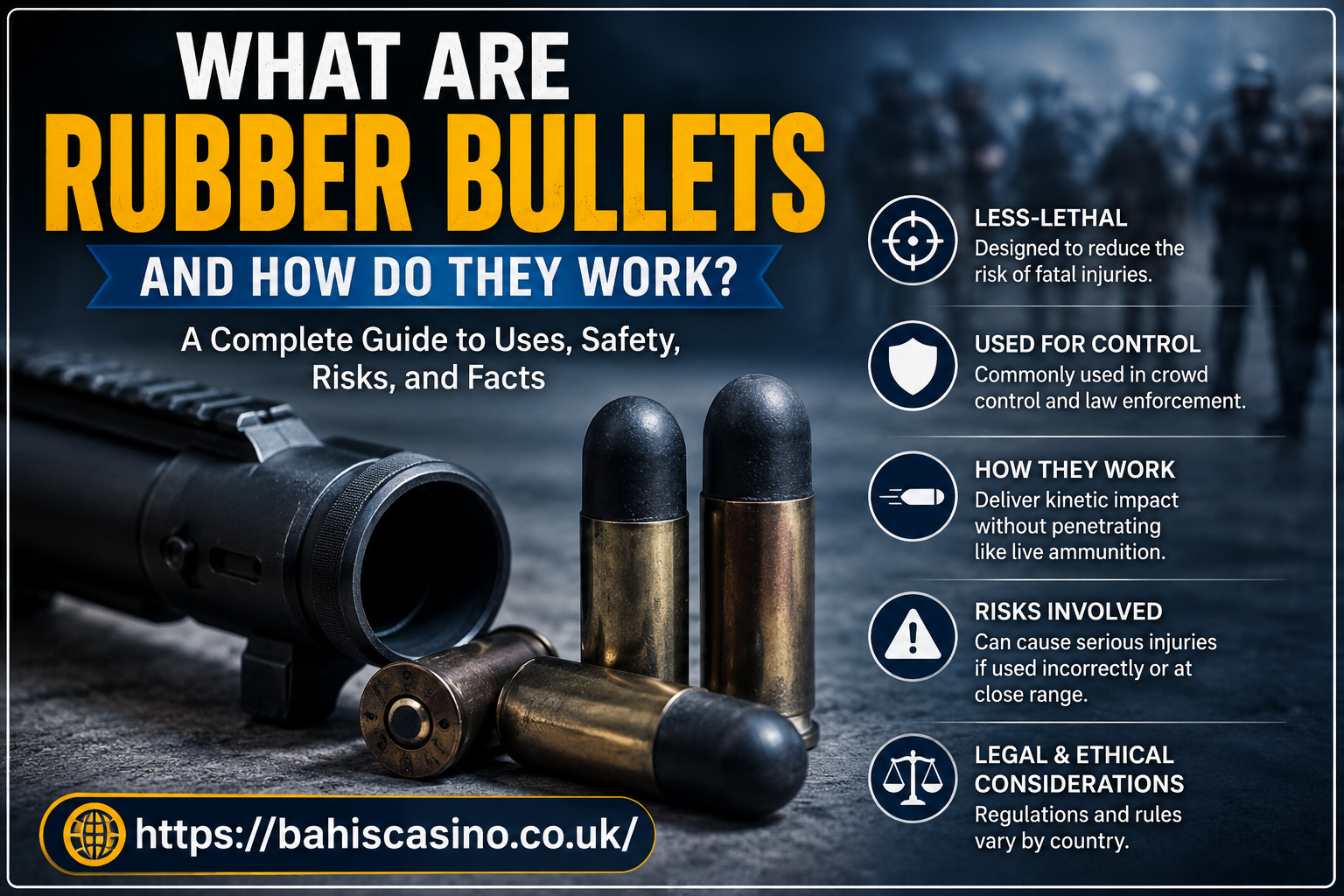
Rubber bullets are a type of less-lethal projectile designed to reduce the likelihood of fatal injuries compared with conventional ammunition. They are often discussed in relation to crowd control, law enforcement, training, and security situations. However, many people have questions about what rubber bullets actually are, how they function, and whether they are truly safe.
Despite their name, rubber bullets are not simply harmless pieces of rubber. They are projectiles that can still cause serious injuries under certain conditions, especially when used incorrectly or at close range. Understanding how they work, why they are used, and what risks they carry helps people develop a more accurate view of this specialized type of ammunition.
What Are Rubber Bullets?
Rubber bullets are projectiles made partly or entirely from rubber, plastic, or similar flexible materials. They are designed to deliver an impact without using the same type of metal projectile found in traditional ammunition.
The term “rubber bullets” is often used broadly, but different types of less-lethal projectiles exist. Some may contain rubber components, while others use materials such as foam, plastic, or composite mixtures.
The main idea behind these projectiles is to create a strong impact that can discourage movement or stop a person temporarily while lowering the probability of a fatal injury.
However, the word “less-lethal” is important. It does not mean harmless. Under certain circumstances, rubber bullets can cause broken bones, internal injuries, eye damage, or even death.
How Do Rubber Bullets Work?
Rubber bullets work by transferring kinetic energy from the projectile to the target. Instead of penetrating like traditional ammunition, they are generally designed to create a blunt-force impact.
When a rubber projectile strikes a surface, several things influence the result:
- The speed of the projectile
- The distance from which it is fired
- The weight and design of the projectile
- The location of impact
- The angle of impact
A rubber bullet hitting a protected area of the body may cause pain and temporary discomfort. A strike to a sensitive area, such as the head or neck, can lead to severe consequences.
The Science Behind the Impact
A projectile carries energy because of its movement. When it hits a target, that energy is transferred into the body.
Traditional ammunition is designed to penetrate, while many rubber-based projectiles are designed to spread impact over a larger area. This difference changes the type of injury that may occur.
Possible effects can include:
- Bruising
- Swelling
- Cuts or abrasions
- Muscle injuries
- Bone fractures
- Serious trauma in vulnerable areas
Why Are Rubber Bullets Used?
Rubber bullets are mainly used in situations where authorities or security personnel want an option between verbal commands and traditional firearms.
Common uses include:
Crowd Control
One of the most recognized uses of rubber bullets is managing large gatherings or situations where authorities believe physical intervention is necessary.
They may be used as part of a wider strategy that includes:
- Communication efforts
- Barriers
- Protective equipment
- Other less-lethal tools
Training Applications
Some organizations use specialized rubber projectiles for training exercises because they can simulate certain firearm situations while reducing some risks compared with live ammunition.
Security Situations
In some environments, security teams may use less-lethal options when attempting to manage threats without immediately resorting to deadly force.
Rubber Bullets vs Live Ammunition
Understanding the difference between rubber bullets and conventional ammunition helps explain why they are classified differently.
| Feature | Rubber Bullets | Live Ammunition |
|---|---|---|
| Main Purpose | Less-lethal response | Lethal force capability |
| Projectile Material | Rubber, plastic, or composite materials | Usually metal-based |
| Intended Effect | Blunt impact | Penetration and severe damage |
| Risk Level | Lower than live rounds but still dangerous | High risk of fatal injury |
| Common Use | Crowd control and specialized situations | Military, law enforcement, and civilian firearms |
While rubber bullets are designed to reduce fatalities, they are still powerful projectiles and require proper handling.
Are Rubber Bullets Safe?
The safety of rubber bullets depends heavily on how they are used. A common misunderstanding is that rubber automatically means safe. In reality, rubber can still create significant force when moving at high speed.
Several factors affect safety:
Distance
The closer a person is when struck, the greater the potential impact force. Short-range impacts can be much more dangerous.
Impact Location
Some parts of the body are more vulnerable than others. Injuries are more likely to become severe when sensitive areas are affected.
Usage Conditions
Training, equipment quality, and proper procedures all influence the risks involved.
Because of these factors, many experts describe rubber bullets as “less-lethal” rather than “non-lethal.”
Types of Rubber Bullets and Similar Projectiles
The term rubber bullets can refer to several different designs. Examples include:
Solid Rubber Projectiles
These are made primarily from rubber and are designed to deliver blunt-force impact.
Rubber-Coated Projectiles
Some projectiles use a different internal material with a rubber outer layer.
Flexible Baton Rounds
These are designed to spread impact over a wider area rather than penetrate.
Other Less-Lethal Alternatives
Some systems use materials such as foam, plastic, or other specialized compounds instead of traditional rubber.
The exact design depends on the manufacturer, purpose, and regulations of the region where they are used.
Common Misconceptions About Rubber Bullets
“Rubber Bullets Cannot Cause Serious Injury”
This is one of the biggest misconceptions. Rubber bullets can cause serious harm, especially if they strike vulnerable areas or are used improperly.
“Rubber Means Completely Safe”
Rubber is softer than metal, but speed and force still matter. A high-speed projectile can transfer significant energy.
“They Always Replace Traditional Ammunition”
Rubber bullets are only one option in situations where less-lethal tools are considered appropriate. Their use depends on circumstances, policies, and legal requirements.
Legal and Ethical Considerations
The use of rubber bullets varies widely around the world. Different countries and regions have different rules regarding:
- Who can use them
- When they may be deployed
- Training requirements
- Restrictions on specific situations
There are also ongoing discussions about their use during protests, demonstrations, and public events. These discussions often focus on balancing public safety with the risk of unnecessary injury.
Understanding the legal environment is important because the same type of projectile may have different rules depending on location.
How Rubber Bullets Fit Into Less-Lethal Technology
Rubber bullets are part of a broader category of tools designed to provide alternatives to deadly force.
Other examples of less-lethal technologies include:
- Chemical irritants
- Stun devices
- Impact projectiles
- Distraction devices
- Protective equipment
The goal of these technologies is generally to provide options between doing nothing and using deadly force.
However, every tool carries risks, and effectiveness depends on proper training, judgment, and responsible use.
Frequently Asked Questions
Are rubber bullets made completely from rubber?
Not always. The term “rubber bullets” can describe several types of projectiles made from rubber, plastic, or composite materials.
Can rubber bullets kill someone?
Yes, although they are designed to reduce fatal outcomes compared with traditional ammunition. Severe injuries or deaths can occur in certain situations, especially with improper use or vulnerable impact areas.
Are rubber bullets considered non-lethal?
They are usually described as less-lethal rather than non-lethal because they can still cause serious injuries.
What are rubber bullets used for?
Rubber bullets are commonly associated with crowd control, specialized law enforcement situations, security operations, and some training environments.
Do rubber bullets hurt?
Yes. Rubber bullets are designed to create a strong impact, which can cause pain, bruising, and other injuries.
How are rubber bullets different from normal bullets?
Traditional bullets are generally designed to penetrate targets, while rubber bullets are designed to create blunt-force impact with a lower likelihood of fatal injury.
Are rubber bullets legal everywhere?
No. Regulations vary by country and region. Their use may be restricted depending on local laws and policies.
Conclusion
Rubber bullets are often misunderstood because their name suggests they are harmless. In reality, they are specialized less-lethal projectiles designed to provide an alternative to traditional ammunition in certain situations.
Understanding what rubber bullets are and how they work requires looking beyond the material they are made from. Their effects depend on design, speed, distance, impact location, and responsible use. While they may reduce the risk of fatal outcomes compared with live ammunition, they can still cause serious injuries.
A balanced understanding of rubber bullets helps readers recognize both their intended purpose and their limitations. Like any force-related technology, they require careful use, proper training, and awareness of the risks involved.