







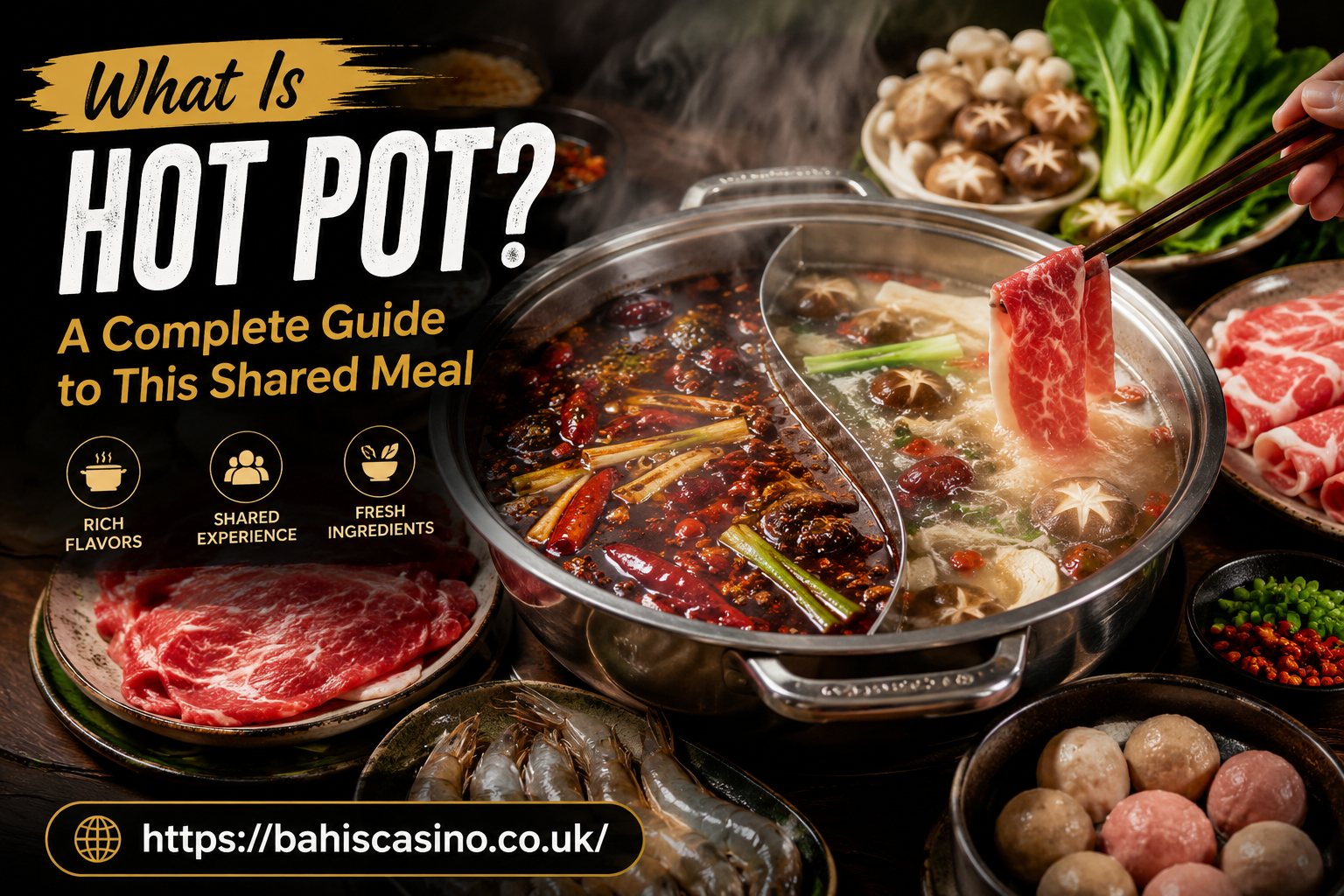
Few meals bring people together quite like Hot Pot. Unlike traditional dishes served on individual plates, hot pot transforms dining into an interactive experience where everyone gathers around a simmering pot of flavorful broth, cooks fresh ingredients together, and shares the meal at their own pace.
Originating in East Asia, hot pot has become a global favorite because of its flexibility, variety, and social nature. From spicy Sichuan-style broths to mild herbal soups, there are countless ways to enjoy this communal meal. Diners can choose their favorite meats, seafood, vegetables, noodles, and dipping sauces, creating a personalized dining experience every time.
What Is Hot Pot?
Hot Pot is a cooking method and dining experience where a pot of hot broth is placed at the center of the table. Diners cook raw ingredients in the boiling broth and eat them once they are fully prepared.
Instead of a chef preparing an entire dish in the kitchen, guests participate in the cooking process themselves. This makes hot pot different from many traditional restaurant meals because it combines cooking, conversation, and sharing.
A typical Hot Pot meal includes:
- A central pot filled with broth
- A heat source to keep the broth simmering
- Raw ingredients arranged around the table
- Individual dipping sauces for extra flavor
- Chopsticks or utensils for cooking and serving
The experience is often relaxed and social, making it popular for family gatherings, celebrations, and group meals.
The History and Cultural Meaning of Hot Pot
Hot pot has a long history, especially in China, where it has been enjoyed for centuries. The dish developed as a practical way for people to cook food together while sharing warmth during colder seasons.
Different regions created their own versions based on local ingredients, climate, and flavor preferences. Over time, hot pot spread across Asia and later gained popularity worldwide.
In many cultures, hot pot represents:
- Togetherness and connection
- Family traditions
- Hospitality toward guests
- Sharing food as a social activity
The meal is not only about eating; it is about spending time together around the table.
How Does Hot Pot Work?
The hot pot experience usually follows a simple process.
1. Choose the Broth
The broth forms the foundation of the meal. Restaurants often provide several options, including:
| Broth Type | Flavor Profile |
|---|---|
| Spicy broth | Bold, spicy, and rich |
| Mushroom broth | Earthy and savory |
| Chicken broth | Mild and comforting |
| Seafood broth | Fresh and delicate |
| Herbal broth | Fragrant and traditional |
Some restaurants offer divided pots, allowing diners to enjoy multiple broths at the same time.
2. Select Ingredients
Once the broth is ready, ingredients are added and cooked directly at the table.
Common choices include:
- Thinly sliced beef
- Lamb slices
- Chicken
- Shrimp and seafood
- Fish balls
- Tofu
- Mushrooms
- Leafy greens
- Potatoes
- Dumplings
- Noodles
Cooking times vary depending on the ingredient. Thin meat slices may cook within seconds, while vegetables and noodles may require longer.
3. Prepare a Dipping Sauce
Many hot pot meals include a sauce station where diners mix their own flavors.
Popular sauce ingredients include:
- Sesame paste
- Soy sauce
- Garlic
- Chili oil
- Green onions
- Sesame seeds
- Vinegar
- Fresh herbs
Creating a personal dipping sauce allows each person to customize the taste.
Popular Types of Hot Pot Around the World
Hot pot has many regional variations, each offering unique flavors and traditions.
Chinese Hot Pot
Chinese hot pot is one of the most recognized versions worldwide. It includes many regional styles, such as:
Sichuan Hot Pot
Known for its spicy and numbing flavor, Sichuan hot pot often uses chili peppers and Sichuan peppercorns to create a distinctive taste.
Beijing Hot Pot
Traditional Beijing-style hot pot often features a simple lamb broth that highlights the quality of the ingredients.
Yunnan Mushroom Hot Pot
This version focuses on fresh mushrooms and lighter flavors.
Japanese Hot Pot
Japan has several hot pot dishes, often called “nabe.”
Popular examples include:
- Shabu-shabu: Thinly sliced meat cooked quickly in light broth
- Sukiyaki: A sweeter style featuring soy sauce, sugar, and beef
Japanese hot pot often emphasizes simplicity and high-quality ingredients.
Korean Hot Pot
Korean hot pot variations often feature stronger flavors and hearty ingredients.
Common examples include:
- Budae-jjigae-style hot pots
- Seafood-based hot pots
- Spicy vegetable and meat combinations
Korean versions frequently include ingredients such as kimchi, mushrooms, seafood, and noodles.
Thai Hot Pot
Thai hot pot combines fresh ingredients with bold flavors. It often includes seafood, vegetables, spicy sauces, and aromatic herbs.
Popular flavors include:
- Lemongrass
- Chili
- Lime
- Garlic
- Fresh herbs
Essential Hot Pot Ingredients
One of the biggest advantages of hot pot is its flexibility. Almost any ingredient that cooks well in broth can become part of the meal.
Protein Options
Popular protein choices include:
- Beef slices
- Pork
- Chicken
- Lamb
- Shrimp
- Fish
- Seafood balls
Thinly sliced meats are especially common because they cook quickly.
Vegetable Choices
Vegetables add freshness and balance. Common options include:
- Bok choy
- Napa cabbage
- Spinach
- Mushrooms
- Corn
- Carrots
- Lotus root
Carbohydrates
Many people finish their hot pot meal with:
- Rice
- Udon noodles
- Glass noodles
- Ramen noodles
- Dumplings
These ingredients absorb the flavorful broth.
Why Is Hot Pot So Popular?
Hot pot continues to grow in popularity because it offers something different from ordinary dining.
Customization
Everyone can choose ingredients and flavors according to personal preferences. One person may prefer spicy broth and seafood, while another may choose mild broth with vegetables.
Social Experience
Because cooking happens at the table, hot pot encourages conversation and interaction.
Variety
A single meal can include dozens of ingredients, making it suitable for different tastes and dietary preferences.
Comfort and Warmth
A steaming pot of broth creates a cozy atmosphere, especially during colder weather.
Hot Pot Etiquette: Tips for Beginners
If you are trying hot pot for the first time, a few simple habits can improve the experience.
Keep Raw and Cooked Foods Separate
Use different utensils for raw ingredients and cooked food to maintain good hygiene.
Cook Ingredients Properly
Make sure meats and seafood are fully cooked before eating.
Share the Cooking Space
Remember that hot pot is a group meal. Avoid adding too many ingredients at once or taking everything for yourself.
Try Different Flavors
Experiment with broths, sauces, and ingredients to discover your favorite combinations.
How to Enjoy Hot Pot at Home
You do not need a restaurant to enjoy hot pot. Creating a home version is simple.
Basic equipment includes:
- A portable burner or electric hot pot cooker
- A large pot
- Chopsticks and serving utensils
- Small bowls for sauces
A simple home hot pot setup:
- Prepare your preferred broth.
- Arrange ingredients on plates.
- Heat the broth until it simmers.
- Add ingredients gradually.
- Enjoy fresh food directly from the pot.
Home hot pot is especially popular for family dinners because everyone can participate.
Hot Pot vs Traditional Meals
| Feature | Hot Pot | Traditional Meal |
|---|---|---|
| Cooking | Done at the table | Usually prepared beforehand |
| Experience | Interactive and social | More structured |
| Customization | High flexibility | Limited choices |
| Best For | Groups and gatherings | Individual dining |
Hot pot offers a slower, more interactive way to enjoy food.
Frequently Asked Questions
What does hot pot mean?
Hot pot refers to a shared meal where diners cook raw ingredients in a pot of simmering broth placed at the center of the table.
Is hot pot healthy?
Hot pot can be a balanced meal when prepared with fresh vegetables, lean proteins, and moderate amounts of sauces. The nutritional value depends on the ingredients and broth chosen.
What ingredients are usually used in hot pot?
Common hot pot ingredients include sliced meats, seafood, vegetables, tofu, mushrooms, dumplings, and noodles.
How long does it take to cook food in hot pot?
Cooking time depends on the ingredient. Thin meat slices may cook in seconds, while vegetables and noodles usually take longer.
What is the difference between hot pot and fondue?
Both involve cooking food at the table, but hot pot uses flavorful broth while fondue typically involves melted cheese, chocolate, or oil.
Can vegetarians enjoy hot pot?
Yes. Vegetarian hot pot can include vegetable broths, tofu, mushrooms, leafy greens, noodles, and plant-based proteins.
Is hot pot difficult to make at home?
No. With a suitable pot, broth, and fresh ingredients, hot pot is one of the easier shared meals to prepare at home.
Conclusion
Hot Pot is much more than a meal; it is a shared experience built around connection, creativity, and choice. Its unique combination of flavorful broths, fresh ingredients, and interactive cooking has helped it become a favorite dining tradition across the world.
Whether you try a traditional Chinese hot pot, a Japanese nabe, a Korean variation, or create your own version at home, the experience offers endless opportunities to explore new flavors.
For beginners, hot pot is easy to enjoy because there are no strict rules. Choose a broth you like, select fresh ingredients, gather your friends or family, and enjoy a meal designed to bring people together.