






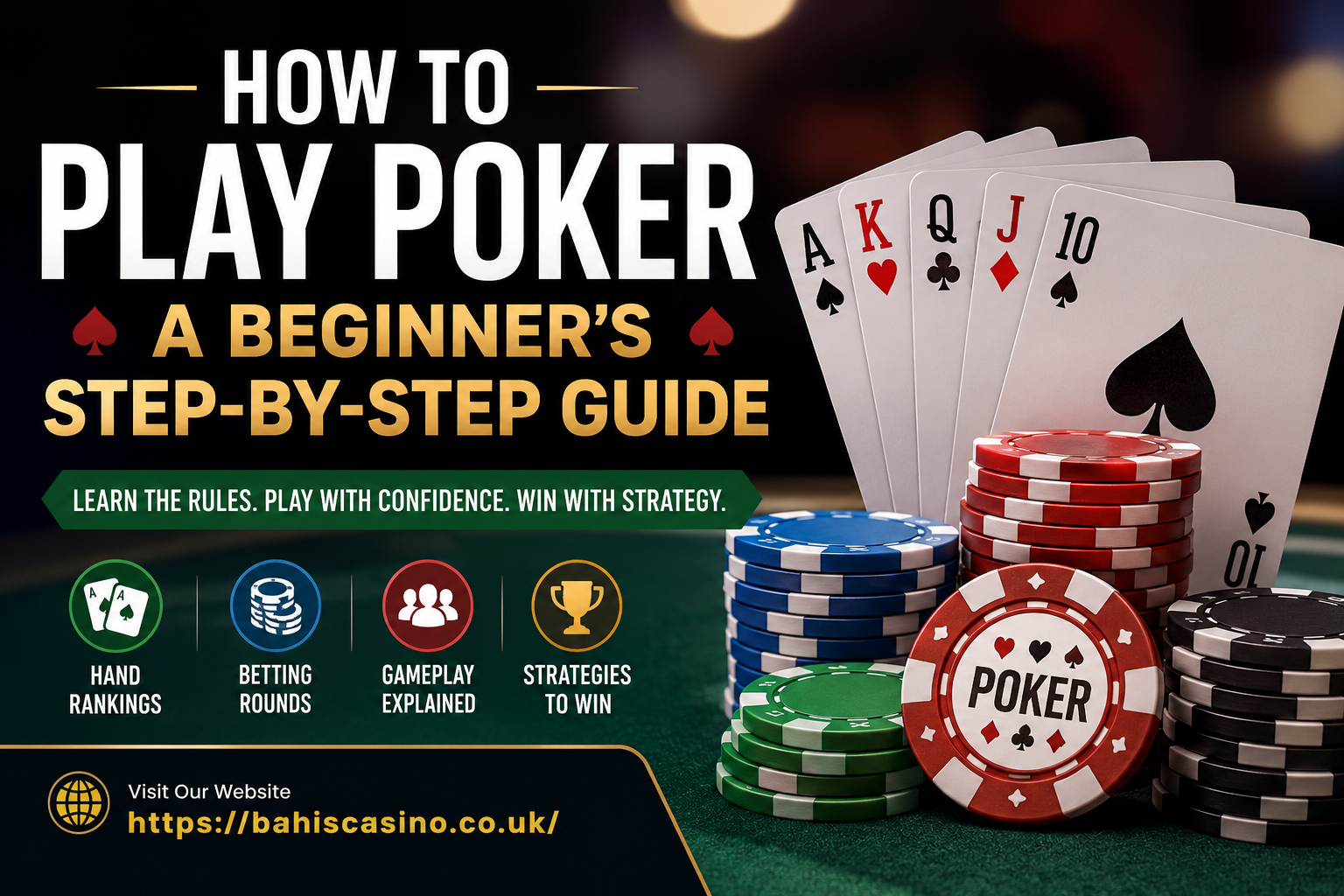
How to Play Poker A Beginner’s Step-by-Step Guide
Learning how to play poker is easier than many beginners expect. While poker has a reputation for being a game of strategy and skill, the basic rules can be learned in just one sitting. Whether you’re planning to play with friends, join an online poker room, or simply understand the game, knowing the fundamentals gives you a strong starting point.
Poker combines strategy, psychology, probability, and decision-making. Unlike games based entirely on luck, experienced players consistently make better decisions over time by understanding the odds, reading opponents, and managing their chips wisely.
What Is Poker?
Poker is a popular card game played around the world. Players compete to build the strongest hand or convince opponents to fold through strategic betting.
Although there are many poker variants, Texas Hold’em is the most widely played version and is the best place for beginners to start learning.
Poker is a game that rewards:
- Strategic thinking
- Patience
- Observation
- Risk management
- Emotional control
Luck influences individual hands, how to play poker but skill plays a much bigger role over hundreds or thousands of games.
The Objective of Poker
The goal is simple:
Win the pot, which is the total amount of chips wagered during a hand.
You can win in two ways:
- Have the best five-card poker hand at showdown.
- Make every other player fold before showdown.
Understanding when to bet, call, raise, or fold is just as important as having strong cards.
Poker Hand Rankings
Before learning gameplay, memorize the hand rankings.
| Rank | Poker Hand | Example |
|---|---|---|
| 1 | Royal Flush | A♥ K♥ Q♥ J♥ 10♥ |
| 2 | Straight Flush | 9♣ 8♣ 7♣ 6♣ 5♣ |
| 3 | Four of a Kind | K♠ K♦ K♣ K♥ 5♦ |
| 4 | Full House | Q♣ Q♦ Q♠ 8♥ 8♣ |
| 5 | Flush | Five hearts not in sequence |
| 6 | Straight | 10♠ 9♥ 8♦ 7♣ 6♠ |
| 7 | Three of a Kind | J♦ J♠ J♣ 4♥ 9♦ |
| 8 | Two Pair | A♠ A♦ 7♣ 7♥ K♠ |
| 9 | One Pair | 5♣ 5♥ K♦ 10♠ 3♣ |
| 10 | High Card | A♣ J♦ 8♠ 5♥ 2♣ |
Knowing these rankings is essential because every betting decision depends on the strength of your hand.
Basic Poker Terms Every Beginner Should Know
Learning common poker terminology makes following the game much easier.
| Term | Meaning |
|---|---|
| Pot | Total chips being played for |
| Blind | Forced bets before cards are dealt |
| Dealer Button | Indicates dealer position |
| Fold | Give up your hand |
| Call | Match the current bet |
| Raise | Increase the bet |
| Check | Pass without betting when allowed |
| All-In | Bet all your remaining chips |
How Texas Hold’em Works
Texas Hold’em follows a simple structure.
Each player receives:
- Two private cards (hole cards)
Five community cards are placed face-up on the table over several betting rounds.
Players use the best combination of:
- Their two hole cards
- The five community cards
to create the strongest possible five-card hand.
The Four Betting Rounds
Pre-Flop
Every player receives two cards.
Players decide whether to:
- Fold
- Call
- Raise
based only on these cards.
The Flop
Three community cards are revealed.
Players now have more information to evaluate their hand.
Another betting round begins.
The Turn
A fourth community card is dealt.
This card often changes the strength of many hands.
Another betting round follows.
The River
The fifth and final community card is revealed.
Players make their final betting decisions before the showdown.
The Showdown
If two or more players remain after the final betting round:
- Everyone reveals their cards.
- The strongest five-card hand wins.
- The winner collects the pot.
Step-by-Step Example of a Poker Hand
Imagine four players are seated at a table.
You receive:
A♠ K♠
Pre-Flop
You raise because Ace-King is a strong starting hand.
Two players call.
Flop
Cards:
K♦ 8♠ 2♣
You now have top pair with the highest possible kicker.
You bet.
One opponent calls.
Turn
Card:
A♥
Now you have two pair.
You continue betting.
Opponent calls again.
River
Card:
6♦
No obvious draws complete.
You make one final value bet.
Opponent calls.
You reveal:
A♠ K♠
Opponent has:
K♥ Q♥
Your two pair beats their one pair.
You win the pot.
Basic Poker Strategy for Beginners
Learning strategy early helps reduce costly mistakes.
Play Strong Starting Hands
Don’t play every hand.
Good starting hands include:
- AA
- KK
- AK
- AQ
- JJ
Weak hands often lose money over time.
Position Matters
Players who act later have more information.
Late position allows you to:
- Observe opponents
- Control pot size
- Bluff more effectively
Playing more hands in late position is generally profitable.
Don’t Bluff Too Often
Many beginners believe poker is all about bluffing.
In reality:
Successful players bluff selectively.
Good bluffs tell a believable story and are used at the right moments.
Pay Attention to Opponents
Watch for:
- Betting patterns
- Aggression
- Tight or loose play
- Timing
Small observations often provide valuable information.
Protect Your Bankroll
Never risk money you cannot afford to lose.
Set a budget before playing.
Good bankroll management allows you to continue learning without unnecessary financial pressure.
Common Beginner Mistakes
Avoid these frequent errors.
Playing Too Many Hands
Patience is a winning strategy.
Folding weak hands is often the correct decision.
Chasing Every Draw
Just because you could complete a straight or flush doesn’t mean you should continue betting.
Consider the pot odds before calling.
Ignoring Position
Position is one of poker’s biggest strategic advantages.
Acting last gives valuable information.
Letting Emotions Take Control
Bad beats happen.
Stay calm.
Avoid chasing losses or making emotional decisions.
Forgetting Opponents
Poker isn’t just about your own cards.
Always think about what your opponents might be holding.
Online Poker vs. Home Games
| Feature | Online Poker | Home Games |
|---|---|---|
| Speed | Fast | Slower |
| Skill Level | Mixed | Usually casual |
| Convenience | Play anytime | Requires gathering players |
| Atmosphere | Competitive | Social |
| Learning Opportunity | Excellent | Great for beginners |
Both formats are excellent for learning, though home games often provide a more relaxed environment for new players.
Tips to Improve Your Poker Skills
Improvement comes through consistent practice and reflection.
Consider these habits:
- Learn one concept at a time.
- Review hands after each session.
- Watch experienced players.
- Practice patience.
- Focus on making good decisions rather than winning every hand.
- Keep emotions under control.
- Study odds and probabilities over time.
Small improvements compound into stronger overall performance.
Poker Etiquette
Good etiquette creates a better experience for everyone.
Remember to:
- Act when it’s your turn.
- Keep your cards private.
- Avoid discussing folded hands.
- Respect dealers and other players.
- Stay courteous whether you win or lose.
- Follow the table rules.
Good sportsmanship is just as important as good strategy.
Why Poker Is More Than Luck
While luck determines the outcome of individual hands, long-term success depends on skill.
Experienced players consistently outperform beginners because they:
- Choose better starting hands.
- Understand probabilities.
- Read opponents effectively.
- Manage their bankroll.
- Control emotions.
- Make disciplined decisions.
This balance of chance and strategy is one reason poker remains one of the world’s most popular card games.
Frequently Asked Questions
1. Is poker difficult to learn?
No. The basic rules can be learned in an hour, although becoming a skilled player takes practice and experience.
2. Which poker variation is best for beginners?
Texas Hold’em is the best choice because it has straightforward rules, abundant learning resources, and is the most widely played format.
3. How many players can play poker?
Most poker games include between 2 and 10 players, depending on the variant and table size.
4. Do I need to memorize all poker hands?
Yes. Knowing hand rankings is essential because every decision depends on understanding which hands are stronger than others.
5. Can I win poker without bluffing?
Absolutely. Many successful players rely on strong hand selection, solid betting decisions, and disciplined play rather than frequent bluffing.
6. How long does a poker game last?
A casual home game may last one to three hours, while tournaments can continue for several hours or even multiple days.
7. What’s the biggest mistake beginners make?
Playing too many weak starting hands is one of the most common and costly mistakes for new players.
Conclusion
Learning how to play poker begins with understanding the rules, hand rankings, betting rounds, and basic strategy. While the game may seem complex at first, mastering the fundamentals provides a solid foundation for long-term improvement.
Focus on making smart decisions rather than chasing every pot. Play strong starting hands, pay attention to your position, manage your bankroll carefully, and stay patient. As you gain experience, you’ll become more comfortable reading opponents, calculating odds, and adapting your strategy.
Poker is a game where knowledge, discipline, and consistent practice matter far more than short-term luck. By applying the principles in this guide, you’ll be well prepared to enjoy your first games and continue developing into a confident, capable player.