







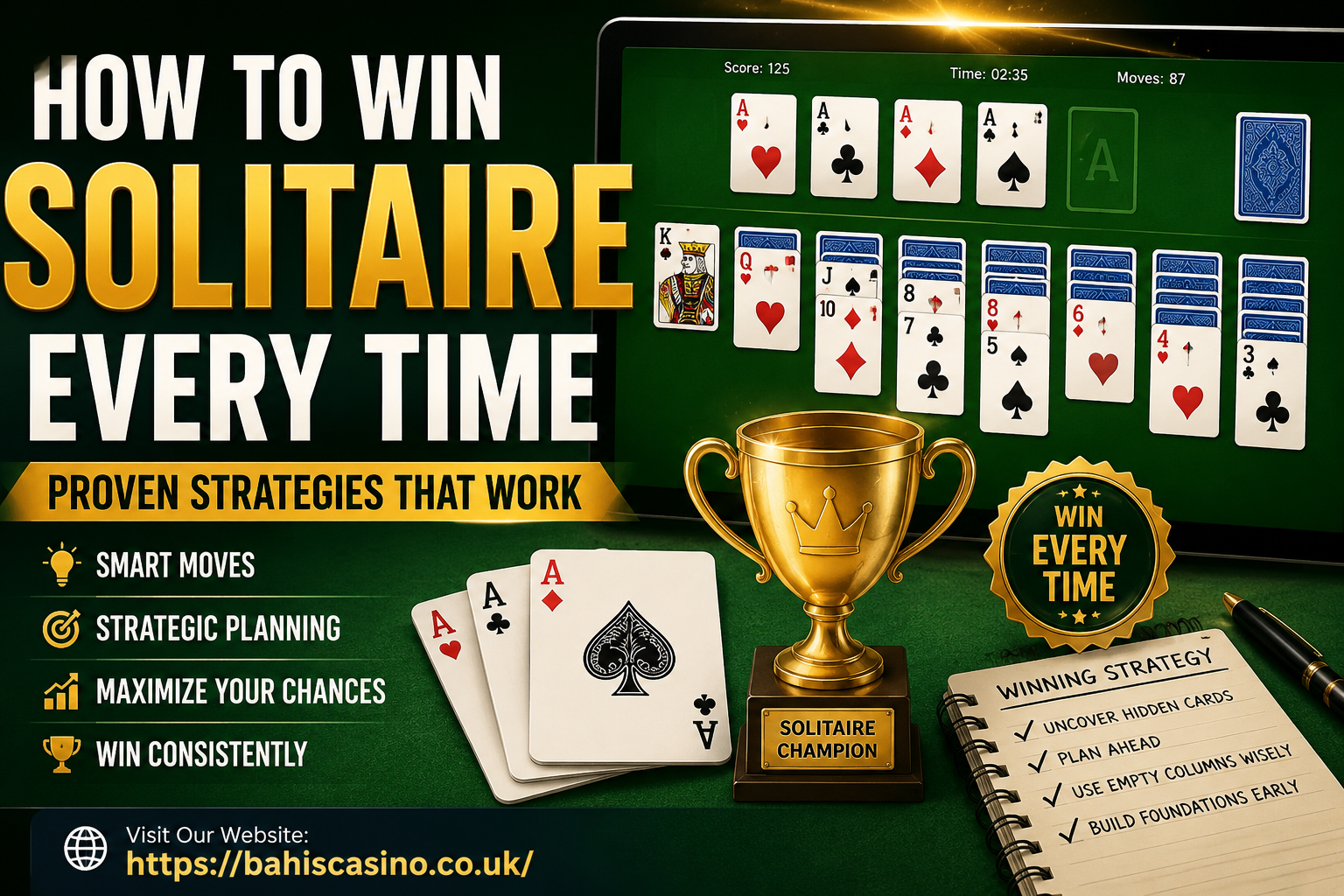
Solitaire is one of the world’s most popular single-player card games, enjoyed by millions because it combines patience, strategy, and problem-solving skills. While luck plays a role in the cards you receive, smart decisions can dramatically improve your chances of winning.
Many players search for How to Win Solitaire Every Time because they want to understand whether consistent victories are possible and what strategies experienced players use. Although no strategy can guarantee a win in every single Solitaire deal, mastering the right techniques can help you solve more games, avoid common mistakes, and make better moves.
How to Win Solitaire Every Time Proven Strategies That Work
Understanding How Solitaire Really Works
Before learning advanced techniques, it is important to understand the basic goal of Solitaire.
In classic Klondike Solitaire, the objective is to move all cards into the four foundation piles, organized by suit from Ace to King. The tableau contains seven columns where cards are arranged in descending order with alternating colors.
A successful player must balance several priorities:
- Moving cards to foundations
- Creating useful tableau sequences
- Revealing hidden cards
- Managing available spaces
- Making decisions that keep future options open
The biggest mistake beginners make is focusing only on immediate moves instead of considering how each move affects the rest of the game.
Is It Possible to Win Solitaire Every Time?
The short answer is no. Solitaire contains an element of randomness because the initial card arrangement determines how difficult a game may be.
However, many Solitaire games are winnable, and skilled players can significantly improve their success rate by using effective strategies.
The idea behind How to Win Solitaire Every Time is not about finding a magic trick that defeats every possible deal. Instead, it means learning techniques that help you maximize your chances of winning.
Strong players succeed because they:
- Analyze the board carefully
- Avoid unnecessary moves
- Prioritize important cards
- Think ahead before making decisions
Reveal Hidden Cards as Quickly as Possible
One of the most important Solitaire strategies is uncovering face-down cards in the tableau.
Hidden cards limit your options because you cannot use them until they are revealed. Every time you expose a hidden card, you increase your available choices.
Tips for revealing hidden cards:
- Focus on columns with more face-down cards.
- Move cards that uncover new information.
- Avoid building unnecessary stacks that block important cards.
- Choose moves that create future opportunities.
For example, moving a red six onto a black seven may be legal, but if another move reveals a hidden card, that option may be more valuable.
Do Not Move Cards to the Foundation Too Quickly
A common beginner mistake is sending every available Ace or low card directly to the foundation.
While building foundations is necessary, timing matters.
Sometimes keeping a card in the tableau gives you more flexibility. A low card may be needed to move another sequence or uncover hidden cards.
Before moving a card to the foundation, ask:
- Will this reduce my available moves?
- Do I need this card to organize the tableau?
- Could keeping it available help reveal more cards?
Good Solitaire players understand that progress is not always about moving cards upward immediately.
Plan Several Moves Ahead
Solitaire rewards players who think beyond the current move.
Instead of asking:
“Can I make this move?”
ask:
“What will happen after I make this move?”
A strong approach is to consider:
- The immediate result of the move.
- The cards it will reveal.
- The possible moves that become available afterward.
- Whether the move creates future problems.
This style of thinking separates experienced players from beginners.
Create Empty Tableau Columns Strategically
Empty columns are extremely valuable in Solitaire because they allow you to move King sequences.
A blank column gives you additional space to reorganize cards and unlock difficult positions.
Best practices for empty columns:
- Try to create empty spaces when possible.
- Avoid filling empty columns without a clear purpose.
- Save empty spaces for important King movements.
- Use them to separate blocked card sequences.
For example, moving a King into an empty column may open multiple future moves, while using that space too early can limit your options.
Choose Moves That Increase Your Options
A powerful Solitaire principle is to choose moves that create more possibilities.
Some moves are technically legal but strategically weak.
Compare these two situations:
| Move Type | Result |
|---|---|
| Moving a card without revealing anything | Limited improvement |
| Moving a card that reveals hidden cards | Creates new opportunities |
| Building a sequence that blocks a column | Reduces flexibility |
| Creating space for future moves | Improves control |
The best move is usually the one that gives you more choices later.
Avoid Common Solitaire Mistakes
Many losses happen because of simple errors rather than difficult positions.
Mistake 1: Making the first available move
A legal move is not always the best move.
Take time to compare your options before committing.
Mistake 2: Emptying the stock pile too quickly
Drawing cards from the stock pile without planning can leave you with fewer options later.
Try to organize the tableau before cycling through the deck.
Mistake 3: Ignoring hidden cards
Players often focus on visible cards while leaving face-down cards untouched.
Revealing hidden cards should usually be a major priority.
Mistake 4: Blocking useful cards
Building long sequences can sometimes make important cards unavailable.
Always consider whether a move improves your position or creates restrictions.
Advanced Solitaire Tips for Better Results
Experienced players often use additional techniques to improve their performance.
Count Available Cards
Pay attention to which cards have already appeared. Knowing what remains in the deck can influence your decisions.
For example, if several high cards are still hidden, you may want to avoid committing certain spaces too early.
Delay Moves When Necessary
Sometimes the best move is no move.
Waiting can allow you to:
- Evaluate more possibilities
- Avoid blocking important cards
- Preserve flexibility
How to Win Solitaire Every Time Patience is one of the most valuable Solitaire skills.
Use Undo Features for Learning
Many digital Solitaire versions include an undo option. Instead of using it only to fix mistakes, use it as a learning tool.
Try different approaches and observe:
- Which moves create better positions
- Which decisions lead to dead ends
- How different strategies affect the outcome
Solitaire Strategy Differences for Beginners and Experts
| Beginners | Experienced Players |
|---|---|
| Focus on available moves | Think several steps ahead |
| Move cards quickly | Analyze consequences |
| Build foundations immediately | Balance foundations and tableau |
| Ignore hidden cards | Prioritize uncovering cards |
| Follow obvious moves | Create strategic opportunities |
Improvement comes from gradually shifting from reaction-based play to planned decision-making.
Improving Your Solitaire Win Rate Over Time
Becoming better at Solitaire requires practice and observation.
To improve consistently:
- Review games you lose.
- Identify the move that caused problems.
- Practice recognizing strong patterns.
- Avoid repeating the same mistakes.
- Learn from successful games.
Over time, you will begin recognizing which moves create advantages and which ones lead to difficult positions.
Frequently Asked Questions
Can you actually win Solitaire every time?
No strategy can guarantee a win in every Solitaire game because some deals are impossible to solve. However, using strong techniques can greatly improve your chances of winning.
What is the best first move in Solitaire?
The best first move depends on the layout, but revealing hidden cards and creating more options are usually strong priorities.
Should I always move Aces to the foundation immediately?
Not always. While Aces are important, keeping some cards available in the tableau can sometimes create better opportunities.
What is the most important Solitaire strategy?
Revealing hidden cards while maintaining flexibility is one of the most important strategies for improving your results.
Does Solitaire require skill or luck?
Solitaire requires both. Luck determines the initial card arrangement, but skill determines how effectively you handle the available options.
How can beginners get better at Solitaire?
Beginners should focus on planning ahead, avoiding rushed moves, uncovering hidden cards, and learning from mistakes.
Are online Solitaire games easier to win?
Some online Solitaire games may include features like hints or undo options, but the basic strategy remains the same. Good decision-making improves results regardless of the platform.
Conclusion
Learning How to Win Solitaire Every Time is about developing better strategy, patience, and decision-making rather than relying only on luck. While no method can guarantee victory in every possible game, proven techniques can help you win more often and enjoy a more rewarding Solitaire experience.
The strongest players focus on revealing hidden cards, protecting their options, planning ahead, and making moves that create future opportunities. By practicing these strategies and avoiding common mistakes, you can transform your Solitaire gameplay and approach each challenge with greater confidence.
Whether you are a beginner learning the basics or an experienced player looking to improve your win rate, smart strategy is the key to becoming a better Solitaire player.